Find out the basics and plan the fundamental
- Session
- 1 of 33
- Date
- 22 April 2026
- Time worked
- 3 h 53 min
- Reading time
- 3 min
- Images
- 2
Before I started, I only had a rough idea. I wanted to build a drone that can mostly fly on its own and also has a docking station for charging and keeping it safe. I also already had in mind that I want to use a Raspberry Pi as a kind of brain for internet control and later video stream, but I didn’t really know yet how I would integrate that into the drone.
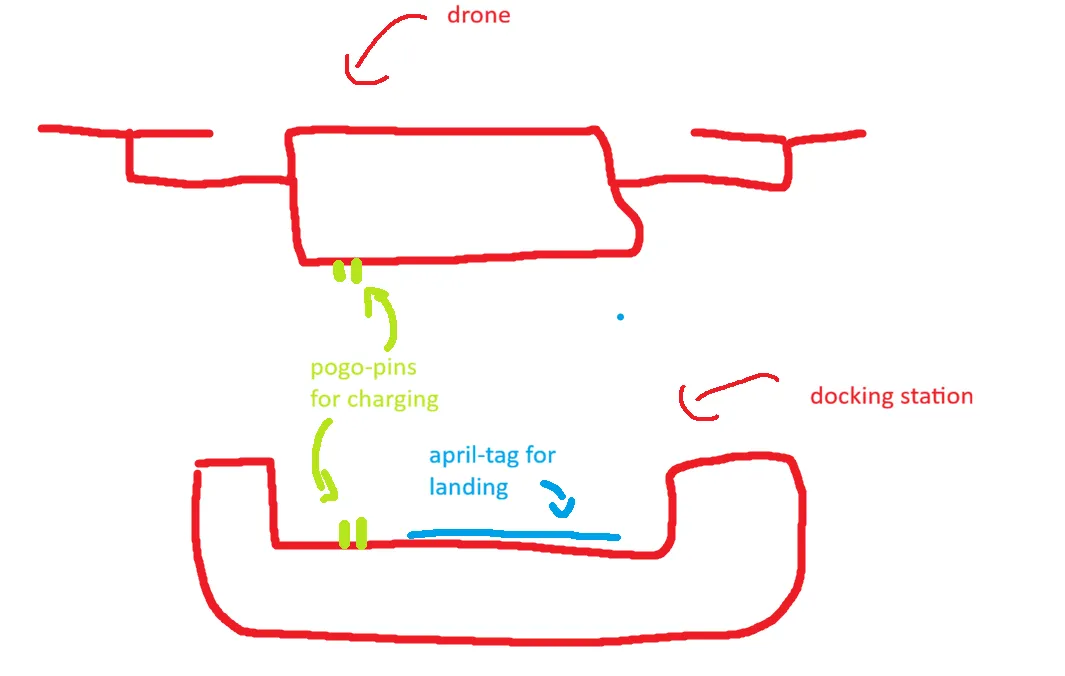
Since I never built a drone before and had almost no experience in this field, I started from zero and learned (by doing):
- what a drone actually is
- how a drone works (lift, motors, control)
- what parts are needed and what they do
This was important because otherwise every part I would pick later would feel random and would probably be wrong
After I saw that there are multiple drone layouts, like X, H and +, I chose the X design because:
- it is the most stable in flight
- it is mostly used for indoor flying
- it is easier to build for beginners
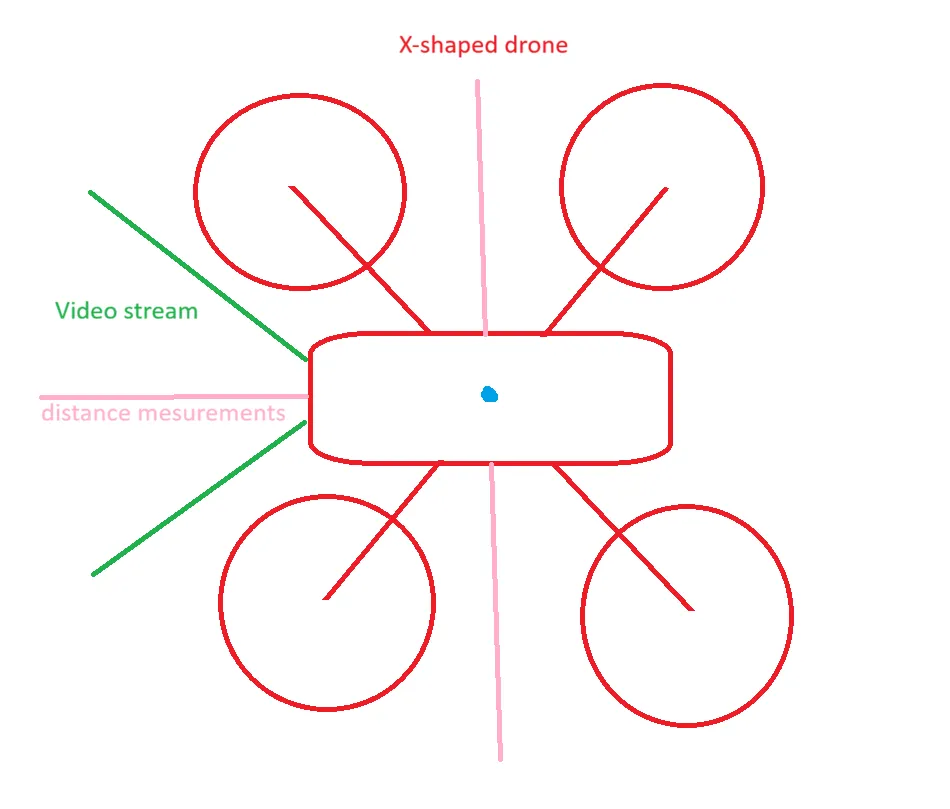
Then I learned that every drone is controlled by a flight controller (FC).
At first I thought they were almost the same and that I could just buy one and it would be fine, but there are HUGE differences.
There are a lot of different FCs and every choice depends on something else: frame size, sensors, voltage, UARTs, software, etc.
This is where I really got stuck in a loop:
I would pick a part, then realize another part doesn’t match, then change that part, and suddenly the first one doesn’t fit anymore. T-T
So it became like:
- choose FC, changes motor choice
- choose motor, changes battery
- choose battery, changes weight
- weight, changes whole frame idea
And then I had to go back again.
It felt like building one decision always breaks another decision...
Another HUGE problem was that:
- many parts were not available in local shops
- some parts were completely sold out
- China shops were (only sometimes) cheaper but had long delivery times (3 weeks, which was too long...)
But after a long time of searching I finally found some pretty good components for my drone.
At the same time I also shaped the system idea more clearly: the Raspberry Pi should not control the motors directly, but instead be as a higher level controller for things like internet connection, remote control and later video streaming, while the flight controller handles the real-time flight control. That split made the whole architecture much clearer.
At first I wanted an F4 flight controller with Betaflight because it is:
- powerful enough
- widely used
But then I ran into the same problem as before:
- many were too expensive
- many were out of stock
- some had long shipping delays
So after a lot of switching and comparing, I decided on the:
DarwinFPV F411 15A AIO
because it was available, fit perfectly in the budget and supports all other parts that I chose.
The next problem I ran into was the weight / thrust ratio
At first my setup gave only ~2:1 thrust ratio.
That is theoretically enough to fly, but extremely slow and unstable.
So I decided to upgrade motors from 1104 to 1204 size
So I lastly decided on the Happymodel 1204 5000KV, because it has very good thrust, is compatible with the other components and is pretty cheap with fast delivery.
To combine everything, I adjusted the full system with the right battery:
Tattu R-Line 850mAh 3S 150C
and for the props:
Gemfan Hurricane 3016 (3 inch)
After checking again if everything was compatible with each other, I had my final components :
- FC: DarwinFPV F411 15A AIO
- Motor: Happymodel 1204 5000KV
- Battery: 3S 850mAh
- Props: Gemfan 3016
Estimated thrust: ~280g per motor × 4 = ~1120g total
This gives around a 3.7:1 thrust ratio, which is actually solid for this drone!
Pretty happy with the progress and learned very much!
Session recordings
Timelapse recordings of this session.